


Balancing data center demand and reliability
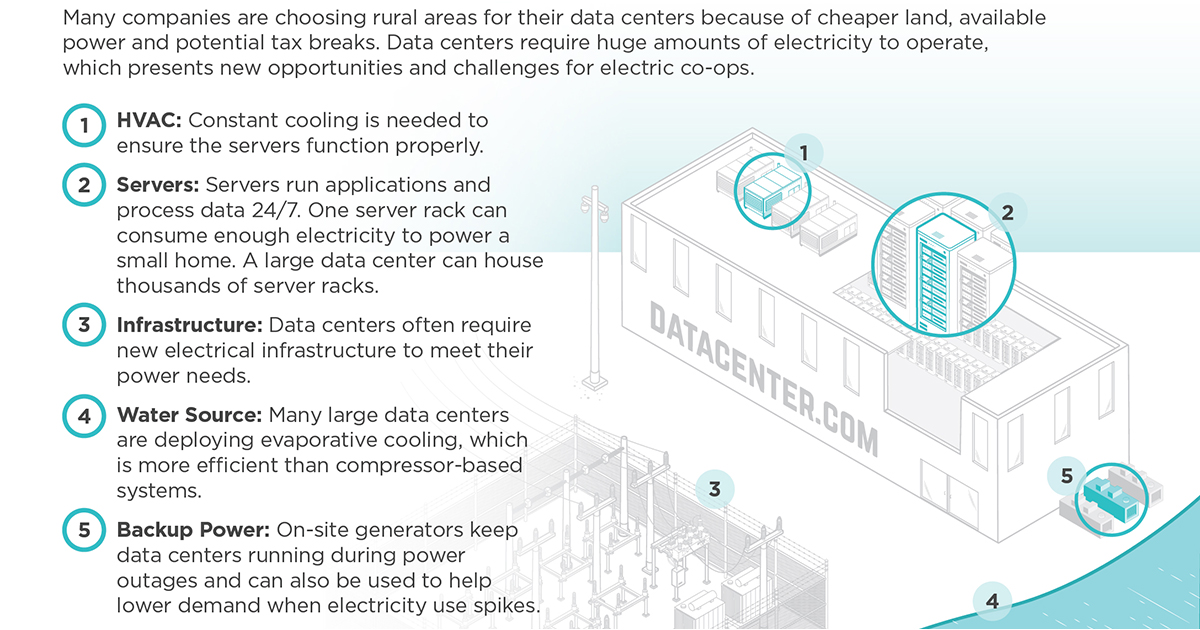
Data centers may feel like a big-city phenomenon, but more of them are showing up in rural communities like ours for good reason. Rural areas offer what data centers need most: affordable land, room to grow and access to transmission lines that can move large amounts of power.
What makes data centers different from other large businesses is their appetite for electricity. These facilities run 24 hours a day, seven days a week. Servers must stay online constantly, which means power has to be reliable every minute of every day.
Powering data centers creates both opportunities and challenges. On the plus side, data centers have the potential to bring steady, long-term load growth that helps support investments in the local grid. With proper planning and policy support, those upgrades could benefit all Gibson Electric members and help keep electric rates steady.
Providing power to data centers presents challenges too. These large facilities can be constructed and operating in as little as one year, but ensuring the necessary infrastructure, equipment and electricity requires longer lead times and significant financial investment.
While Gibson Electric does not currently serve any data centers, co-ops nationwide are fielding requests and inquiries from tech companies, and we could receive similar requests. As a member-owned cooperative, our responsibility is twofold: to listen to the communities we serve and to provide reliable, affordable electric service to all Gibson Electric members.
No matter what the future holds, our priority is to ensure all decisions reflect our member-owners’ best interests.