


Safety starts with awareness
It’s a familiar scene.
You lean your ladder against your house to clean your gutters or paint the trim. The routine task may pull your focus to getting the job done instead of what’s happening above your head.
But when ladders, tools or long materials come too close to overhead power lines, even simple projects can become dangerous.
May is Electrical Safety Month, a time to pause and remember that electricity deserves our attention.
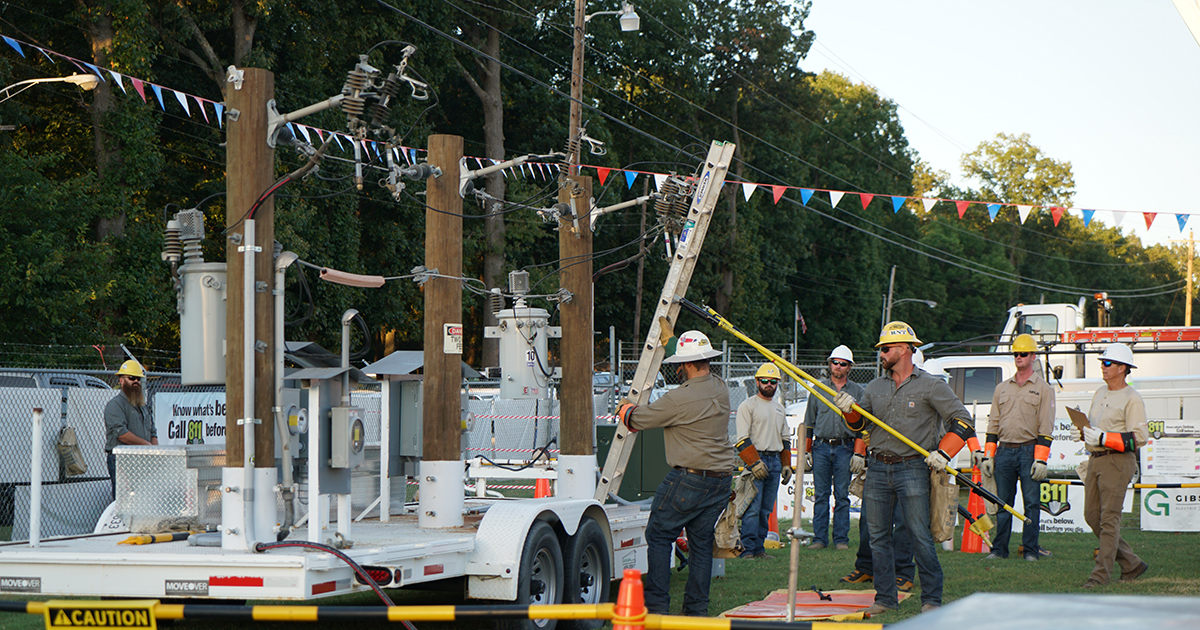
“Most electrical accidents happen during everyday activities, not emergencies,” said Gibson Electric Safety Coordinator Jon Jones. “Taking a moment to notice what’s around you, especially overhead lines, can help prevent a routine project from turning into a serious injury.”
Overhead lines and home projects
Power lines are easy to overlook because they are part of the landscape, but electricity can travel through metal ladders, tools, scaffolding and even tree limbs.
Projects such as cleaning gutters, repairing roofs, painting or trimming trees often involve ladders and long‑handled equipment. Before starting any project, take time to look up, identify where overhead lines are located and plan your work so you stay well away from them. Choosing non‑metal ladders when possible and maintaining a safe distance can reduce risk.
Electricity does not require direct contact to cause injury. Under the right conditions, it can arc. If a project places you close to power lines or feels uncertain, leave the work to trained professionals with the right tools and experience.
Awareness and assumptions
One of the most important safety habits is assumption. Always assume power lines are energized and dangerous. Never touch a line, move debris near it or try to handle equipment that may be in contact with electricity.
If you see a downed power line, stay away and keep others back. Immediately report downed lines to your local Gibson Electric member service center. Even lines that appear inactive can still be energized and pose a serious threat.
Safety inside the home
Inside the home, damaged cords, overloaded outlets and misuse of extension cords can increase the risk of shock or fire.
Extension cords should only be used temporarily and never in place of permanent wiring. Outlets that feel warm, trip breakers frequently or show signs of wear should be checked by a qualified licensed electrician. Ground‑fault circuit interrupters should be used in areas near water, such as kitchens, bathrooms, garages and outdoor outlets.
Children and electrical safety
Children are naturally curious, making electrical safety education especially important. Outlet covers, safely stored cords and supervision around electrical devices can help prevent accidental shocks.
Teach your children to stay away from power lines and electrical equipment, which should never be treated as play areas.
Shared responsibility
At Gibson Electric, helping you recognize and avoid electrical hazards is just as important as providing reliable power. Help protect yourselves, your family and your neighbors by slowing down, planning and respecting electricity. Take a fresh look at your homes and projects and make safety part of every plan.