


Gibson Electric sponsors students on Washington Youth Tour
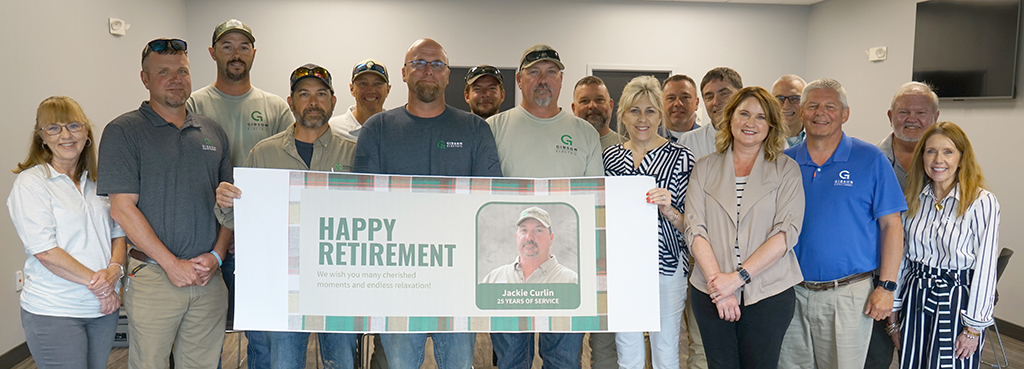
Jackie Curlin reflects on 25 years of service
Jackie Curlin was building and remodeling houses when a Hickman-Fulton Counties RECC superintendent asked him to consider linework.
A few days later, Curlin called the superintendent with an answer.
“I tried it out and ended up staying 25 years,” Curlin said.
Gibson Electric Membership Corporation, which merged with Hickman-Fulton Counties RECC in 2016, hosted a reception recognizing Curlin’s retirement in June. In addition to the merger and a new member service center built in Clinton, Curlin saw plenty of changes during his time as a lineworker. The basics, however, never changed.
“The technology has been the biggest change I’ve seen,” he said. “But we still climb poles and use a bucket (truck).”
With his experience building houses, Curlin was naturally service-minded. Applying those skills at Gibson Electric was an easy transition.
“I’ve always liked helping people,” he said. “It’s not just a job. If you make people happy, your day is happier.”
Curlin also enjoyed spending time with the Hickman, and later, Clinton crews.
“We joked around with each other, and that made the day better,” he said. “I’ve worked with some good people. This has been a good place for taking care of my family.”
Curlin said he would miss the camaraderie and talking with people in the community.
“I always enjoy talking to people,” he said. “And most people want to talk.”
Curlin has no concrete plans for retirement, but he has returned to his carpentry roots, working part-time. He and his wife, Vickie, son, Zack, and grandchildren Collier and Sophie enjoy spending time on the lake, and he looks forward to having more time with them.
“I’m just going to piddle around and do whatever I want to do,” he said.
“We thank Jackie for his years of dedicated service and wish him all the best in retirement,” said Gibson Electric Vice President of Engineering and Operations Barry Smith.
“Surviving Reelfoot” creates lifelong connections
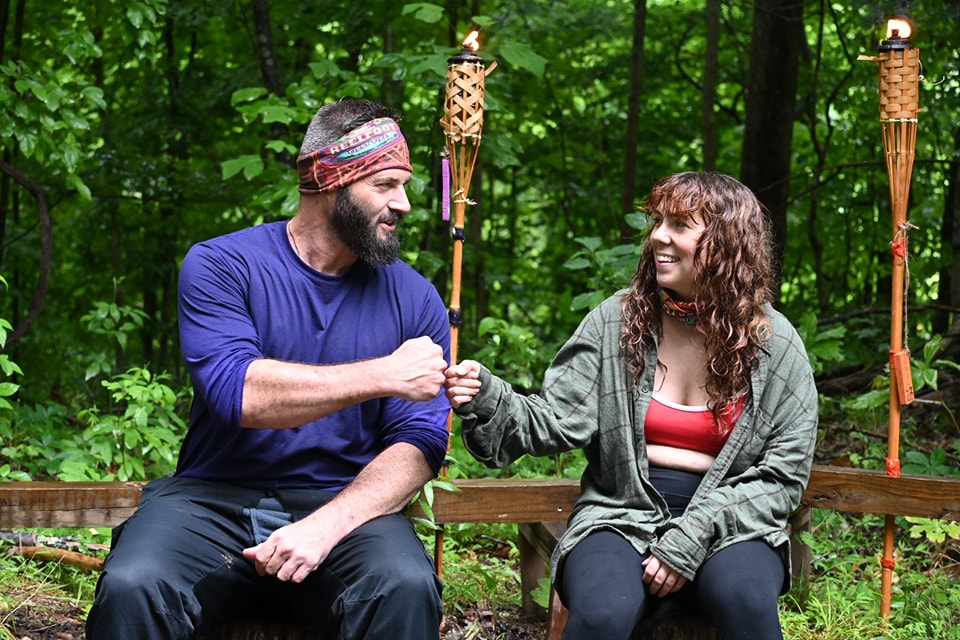
For 13 seasons, a small but passionate group of live reality game (LRG) fans have built lifelong connections through “Surviving Reelfoot.”
Based on the popular CBS reality competition “Survivor”, “Surviving Reelfoot” invites players to spend eight days in Hornbeak, Tennessee, to play what the LRG community calls the most authentic experience outside of the television show – with a crew of dedicated volunteers recording and streaming for a worldwide audience.
The 13th season of “Surviving Reelfoot” wrapped on June 7, 2025, with a record-breaking 1,003,647 views on the game’s Facebook, Instagram, TikTok and YouTube channels.
“I’m very lucky that I have a such a passionate team,” said Amos Smith, “Surviving Reelfoot” creator, a Samburg native who lives in Union City, works full-time as a restaurant server, does some acting in the Knoxville area (he spent six hours on set with Dolly Parton and confirms “she’s just as wonderful in person as you think she is”) and is currently shopping a sitcom that he has written.
Smith launched “Surviving Reelfoot” after his own “Survivor” dream fell short in 2010 when he made it to the final 48 in casting. In 2014, he pulled his first LRG together in his mother-in-law’s backyard, with 11 people competing. “Surviving Reelfoot” now calls the 300-acre Hunter’s Sanctuary in Hornbeak home. It’s hosted players from across the country and beyond, with competitors flying in from Australia, Canada and the UK.
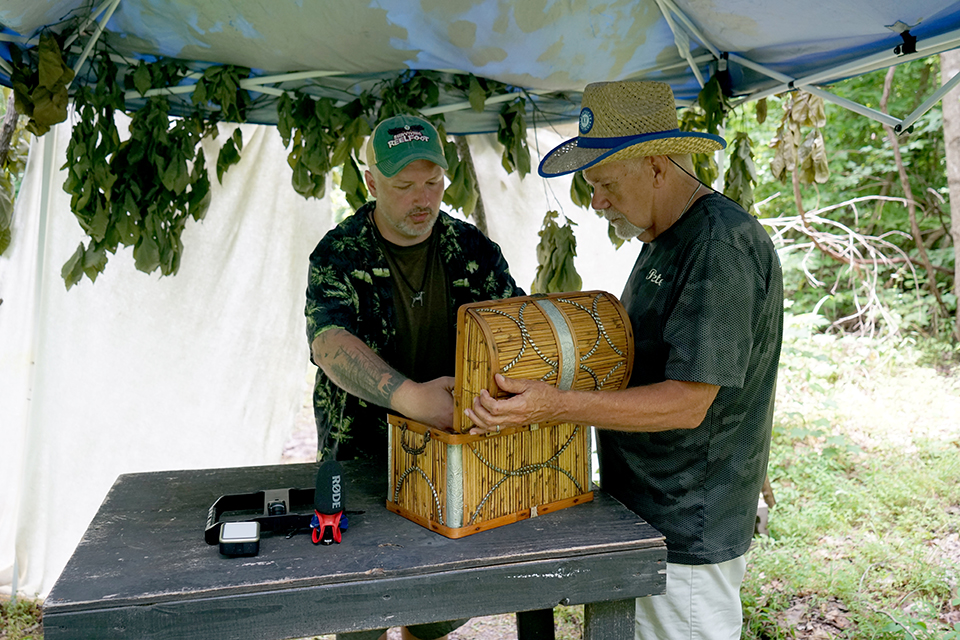
“This is life-changing,” said Pete Morgan of Fulton, Kentucky.
Morgan, a fan of “Survivor”, heard about “Surviving Reelfoot” from a friend who played in the second season. Morgan was selected for Season 4 and enjoyed his experience playing so much that he came back for a second season and partnered with Smith and two other producers to build “Surviving Reelfoot” into a sought-after experience in the LRG community.
“I played and met some of my best friends in the world,” Morgan said.
Smith and his team are committed to giving players the best experience possible. The game starts on a Saturday, and everyone is guaranteed at least two nights in their camp. They size up their competitors and compete in reward challenges until Monday morning, when the first tribal council is held. The game moves quickly from there, with three to four eliminations per day until the jury votes for the winner on Day 8.
When a player is eliminated from the game, they go to the lodge.
“We encourage everyone to stay, but they can go home if they choose,” Smith said. “We tell them just because their game is over doesn’t mean their experience is.”
The experience is so moving that many competitors, like Austin Jackson of Amarillo, Texas, return as volunteers.
“We want ‘Surviving Reelfoot’ to continue to grow and get better,” Jackson, Season 11 winner, said. “We all loved the experience we got, and we want to give that to other people. I’ve met some of my best friends from Reelfoot. It strengthens our bonds to come back and takes our relationships to a new level. We get to know each other even better.”
Planning and producing “Surviving Reelfoot” is year-round. The application window typically opens in August, with producers interviewing three to four applicants every Sunday through December. Once the roster is set, producers spend the next six months preparing the cast for the competition. Season 14 will be played May 30-June 6, 2026.
Learn more on any of the “Surviving Reelfoot” social channels, including Facebook, Instagram, TikTok and YouTube.
How is “Surviving Reelfoot” like “Survivor”?
“Survivors,” or in this case, “Reelfooters” are split into tribes and assigned a camp. Season 13 featured two tribes of nine players. Each tribe is provided with a cooking pot, machete, rope, small tarp, bag of white rice, toilet paper, bug spray and all the fresh water they need.
Challenges and rewards are like those seen on “Survivor”. There are obstacle courses, endurance trials and lots of puzzles. Reward challenges include flint, luxury items for the camp, food and the top prize, immunity.
The first seven voted out of the game spend the remainder of their days in the lodge. Their cellphones are returned to them when they are eliminated. Subsequent eliminated players comprise the jury. They are sequestered without their cellphones in the lodge. They observe the challenges and tribal councils.
This season, players whittled down to the final two competitors, and the jury voted for the winner, Rob Sullivan, a massage therapist from New York City, who won $1500.
Bonus Content
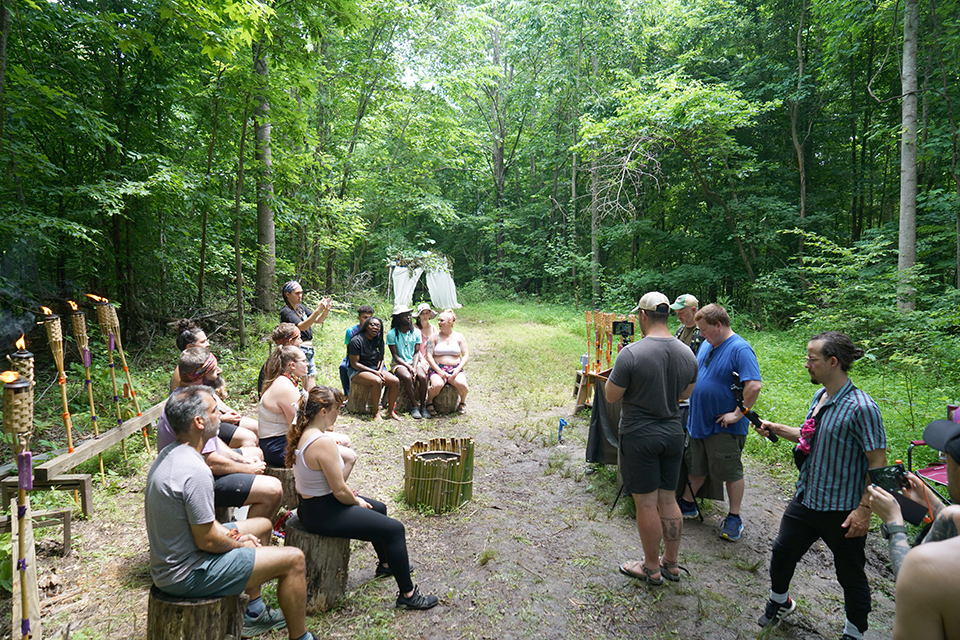
“Surviving Reelfoot” creator Amos Smith and co-producer Pete Morgan invited Gibson Electric to their Day 7 shooting of the show in June. While watching the remaining six contestants compete in an immunity challenge featuring a word puzzle, we asked jury members and castaways when they first noticed cognitive decline. They agreed that the combination of little to no food, physical fatigue and the mental exhaustion of constantly thinking about the game set in on the third day of competition.
“It gets overwhelming,” said Joshua “Trav” Travatello.
We also visited with the season’s youngest and oldest competitors – Colby Dixon, 20, and Debra Mitchell, 61. They played on the same tribe and were voted out before making the jury. This season included Outcast Battle Back, but Dixon and Mitchell missed their chance to return to the game.
Dixon lives in Maryland and has competed in “Survivor” LA” and Rock Creek. “Surviving Reelfoot” was his first multi-day game experience.
“My dream is to make it on ‘Survivor,’” he said. “This game is closest to the real ‘Survivor,’ and I wanted that experience.”
Dixon said he came to “Surviving Reelfoot” with high expectations for himself. Despite leaving the game early, he is grateful to have spent time with the producers and crew.
“I’m part of this community now,” he said. “The whole world was unlocked for me.”
Mitchell lives in Georgia. She was a huge “Survivor” fan but didn’t know LRGs existed until COVID-19 hit. Mitchell, a teacher, joined a Zoom “Survivor” game called “Zoomvivor.”
“It was the highlight of my time during COVID,” she said. “I just loved it so much.”
“Zoomvivor” led her to “SINsation” in Virginia where she connected with a “Surviving Reelfoot” participant.
“There’s a whole world of LRGs out there,” Mitchell said.

Memories made on Washington Youth Tour
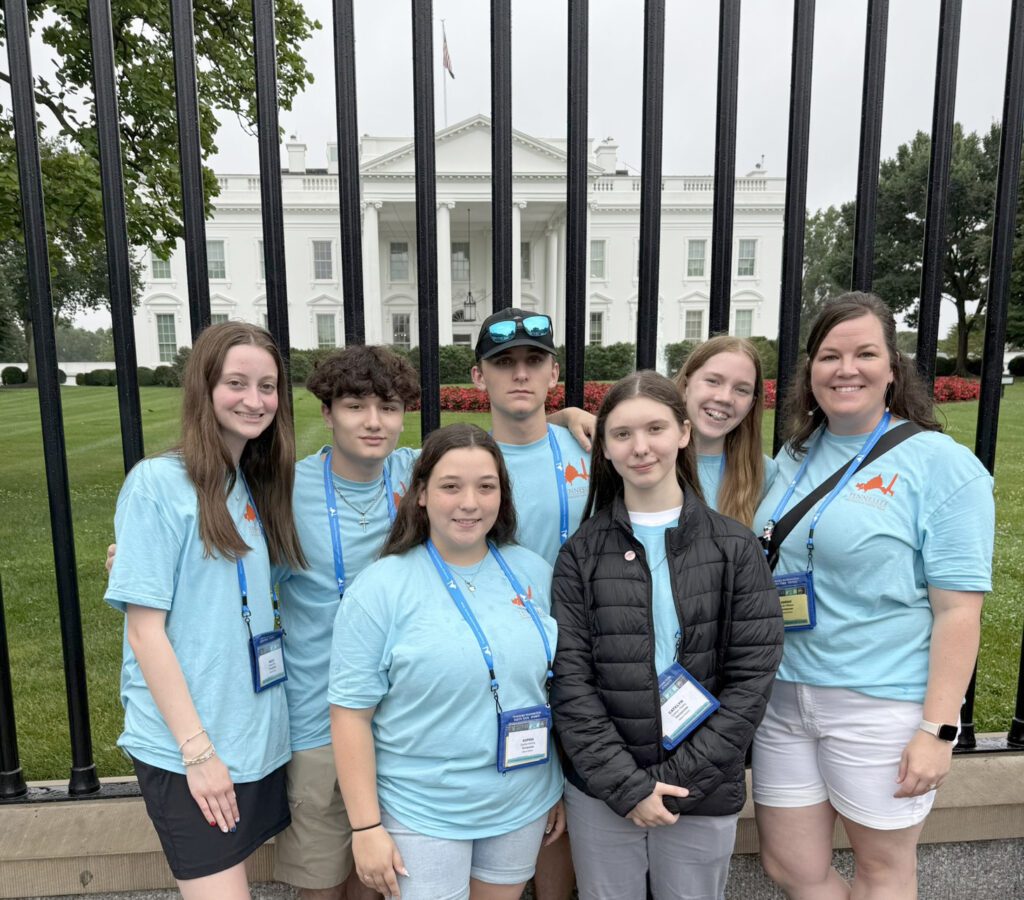
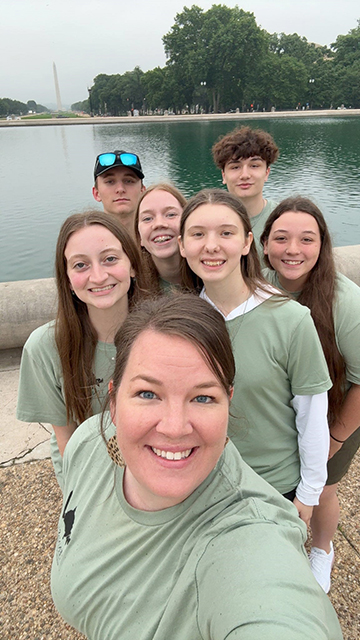
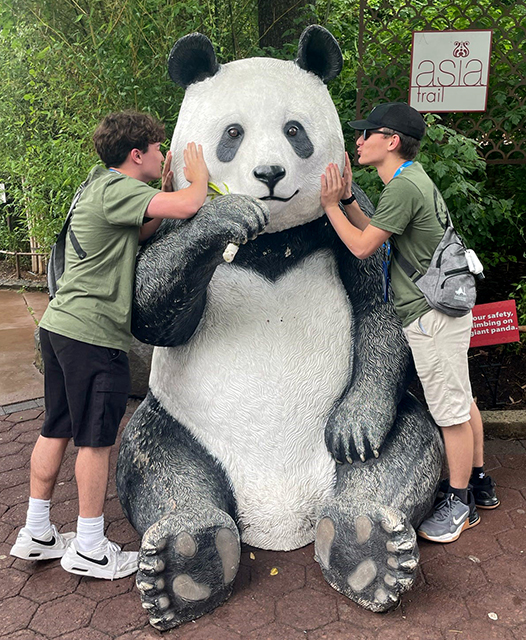
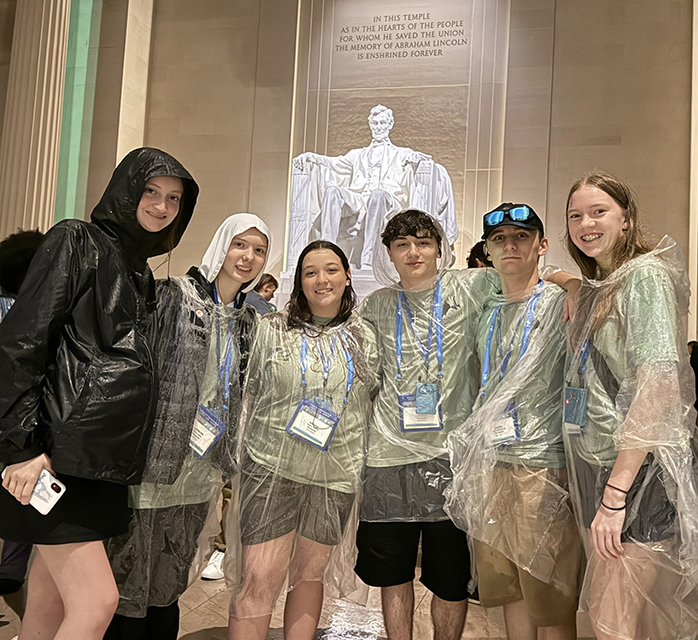
Gibson Electric Membership Corporation sponsored six local high school students on the Washington Youth Tour, June 14-20, 2025. Students spent the week touring Washington, D.C., learning about electric cooperatives and making new friends.
Each year, Gibson Electric and the Tennessee Electric Cooperative Association host a short story creative writing contest to select delegates for the expense-paid trip. Below, they share highlights of the tour.
Claire Evans
Crockett County High School
“The best part of this trip was bonding with my co-op and meeting people from across Tennessee and the country. Going to each monument or museum was even more exciting to tour with new friends. All of us were new to D.C., so we got to explore together and make memories to share for years to come.”
Brian Robertson
Gibson County High School
“My favorite part of the trip was definitely the people. I was surrounded by a bunch of people all trying to make the most out of the trip and it turned out to be an awesome time. I loved every second.”
Catelyn Ripley
Lake County High School
“The best part of the trip was making new friends and memories. I loved seeing the Washington Monument and going to the Museum of the Bible. It was an amazing, unforgettable experience.”
Reese Ulen
Obion County Central High School
“My favorite part of the trip was making new friends and making new memories! I loved going to the Museum of the Bible and seeing the White House! It was truly an unforgettable experience!”
Sophia Harding
Hickman County (Ky.) High School
“My favorite part of the trip was seeing the White House and the Washington Monument in person—it made history feel real. And every time we drove by the Pentagon, it was supposed to be the last time, which made it even more memorable!”
Jaxon Vredingburgh
Peabody High School (At-Large)
“My favorite part about the trip was making memories that’ll last forever. Meeting new friends and even staying up late shaving your head bald just for your trimmers to die halfway through and panic your chaperone.”

Finance your water heater with Gibson Electric
Cut energy costs and improve comfort with a conventional electric water heater.
Gibson Electric Membership Corporation helps make buying a water heater affordable through its financing program:
- Interest-free financing for 36 months.
- No down-payment required. A $30 processing fee will be added to the financed amount.
- Finance water heater equipment up to $600.
- Finance up to $100 of installation costs for electric-to-electric replacements or $175 for gas-to-electric replacements.
The purchase and installation are quick and convenient. Just visit one of our participating water heater dealers, make your selection and sign a Gibson Electric financing agreement. Gibson Electric pays the dealer and sets up interest-free financing on your monthly electric bill.
Tankless units are not eligible for financing.
For more information, including water heater dealers, go to gibsoncoops.com/services, stop by or call your local member service center or call 731-855-4740, ext. 1615.
Literacy program boosts young readers’ skills
A large, colorful display on the lobby wall at Friendship Elementary School puts a playful twist on a classic sci-fi catchphrase:
“Take me to your readers.”
Throughout the 2024-25 school year, veteran teacher Ashlee Hall tracked students’ reading progress by moving their spaceships through the galaxy to show their word count gains. At the top of the display, the final star was reserved for travelers who read one million words.
Hall is the school’s Save the Children reading ambassador. Save the Children provides grant funding for training and resources to help schools accelerate literacy growth.
“This is an incredibly beneficial program,” Hall said. “Every student can make gains because the data provided through the testing pinpoints comprehension skills that need work. That’s my focus.”
In 2024-2025, 59 Friendship students in first through fifth grade participated in the program through Accelerated Reader (AR) testing. They read 13,507,854 words, up from 10 million words in 2023-2024.
All students are tested at the beginning of the year to determine eligibility. Hall works with them in groups of four to five, using books and book studies to help them strengthen specific focus skills and raise their reading levels. She also works with kindergarten and first grade students on early comprehension skills.
This isn’t a reading intervention program but a proactive approach to building literacy. A fourth grader may be reading at grade level, but testing reveals a gap in a skill typically learned in second grade. Hall targets that skill to help students stay on track – or ahead – as they move through school.
With Hall’s guidance, students set their own reading goals, choosing books based on their reading level and interests. Along the way, they earn rewards and develop a love for reading. Save the Children donors provide the incentives, which include books, toys, games and more. In three years, Save the Children has given 7,500 free books to Friendship students.
Family engagement and community involvement are also important components of the literacy program.
“A love for reading really begins in the early years at home and is nurtured throughout our lives,” she said. “That’s why I pour so much effort into activities that promote reading at home and community and school events that show how much fun reading is.”
Two other Crockett County School District schools – Gadsden Elementary and Maury City Elementary – receive Save the School grant funding. Although district leaders agree that the program works, the grant is not guaranteed beyond 2025-2026.
“When you’ve been [teaching] as long as I have and you see what works, you hate to even think about [the program] not being here,” Hall says. “We are always looking for sponsors and donors to partner with us to support this avenue of student learning.”
Learn more at savethechildren.org.
Collins honored for cooperative spirit
Working at a cooperative fits Gibson Electric Engineering Assistant Sandy Collins to a T.
“She is the epitome of the word [cooperative],” said Emily Sullivan, a longtime friend and former colleague.
Collins was recently honored – and surprised – with the Administrative Professional of the Year Award at the Greater Gibson County Area Chamber of Commerce’s annual Administrative Professionals’ Luncheon.
“I didn’t know I was nominated,” Collins said. “I was just there for the fellowship. [The award] was a total surprise.”
Sullivan, who retired from Gibson Electric in 2023, nominated Collins for the award and described her as a “smart and versatile team player” with “such a sweet and humble spirit.”
Collins joined Gibson Electric as a dispatcher in 1989 and moved to a member service representative position a year later. After 17 years in member services, she was promoted to engineering assistant. She is celebrating her 36th work anniversary this month.
Collins’ job requires collaboration and cooperation. She works closely with Gibson Electric engineers and lineworkers to manage job prints and ensure crews have what they need to complete each project.
“I love working with the crews and the engineers,” Collins said. “I enjoy helping people.”
A native of Rutherford and a Gibson County High School alumna, Collins discovered she had a talent for and enjoyed clerical work while attending vocational-technical school at Newbern. She worked six years in manufacturing before getting her shot at Gibson Electric.
“I’ve felt comfortable here since the day I started,” she said. “This has been a good, stable job, and the many friendships have kept me here.”
In her free time, she enjoys spending time with her husband, father, three children and six grandchildren. She is an active member of Salem Baptist Church in Trenton and lives in Dyer.
“Sandy is one of those people who makes everything run more smoothly,” said Gibson Electric Vice President of Engineering and Operations Barry Smith. “We rely on her support, organization and steady presence to keep our team on track. Her recognition as the chamber’s administrative professional of the year is well deserved.”
Gibson Electric welcomes new employees
Gibson Electric Membership Corporation recently welcomed several new employees.
Engineering Intern Josiah Tingley, Seventh-Period Apprentice Lineworkers Hayden French, and Jonathon Keeling, Apprentice Lineworker Baker Osborn and Technical Support Representative Jimmy Bailey joined the team in May.
Tingley is currently pursuing a Master of Business Administration at the University of Tennessee at Martin where he earned his undergraduate degree in mechanical engineering. A native of Memphis, Tingley was a decorated football player at Evangelical Christian School in Cordova and has continued his playing career as an offensive lineman at UT Martin.
“Josiah is eager to learn, and we’re excited to see him contribute to our cooperative’s success,” said Gibson Electric Vice President of Technical Services Charles Phillips.
French is a native of Henry County with seven years of experience in the field. He most recently worked at Trenton Light & Water. He and his wife Shaelynn live in Milan with their three sons, ages 6, 3 and 5 months. He joins the Trenton member service team.
Keeling lives in Elbridge in Obion County and joins the Troy member service team. He also has seven years of experience as a lineworker, most recently at Cruse Power Line Construction, LLC. Keeling and his wife Amber have a son, 10, a daughter, 6, and three dogs.
Osbourn is from Tipton County and previously worked at Forked Deer Electric Cooperative for three years. His dad is a lineworker and inspired him to pursue the same career path. Osbourn lives in Halls and joins our Alamo member service team. He and his fiancée, Lexie, plan to marry this fall.
“We’re confident Hayden, Jonathon and Baker will be excellent additions to our teams in Trenton, Troy and Alamo and will help us continue delivering reliable service to our member-owners,” said Gibson Electric Vice President of Engineering and Operations Barry Smith. “Their experience strengthens our ability to respond efficiently, maintain our system and meet the needs of the communities we serve.”
Bailey is a Jackson native and graduate of Liberty Technology Magnet High School. He has a strong background in technical support and customer service, having worked as a Geek Squad field agent for Best Buy for three years. He and his wife Kacee live in Jackson.
“Jimmy’s knowledge, experience and personality make him a great addition to our team,” Phillips said. “He will provide excellent service to our subscribers.”
How extreme summer temps impact reliability
When outdoor temperatures rise, air conditioners work harder and run longer, causing a noticeable increase in electricity use. Add to that the fact that many people use electricity at the same times—mornings and early evenings—and the demand on our electric grid goes up even more.
At Gibson Electric Membership Corporation, we partner with the Tennessee Valley Authority (TVA), our generation and transmission provider, to ensure you have reliable power every time you flip a switch. But our electric grid is part of a much larger system that extends beyond Gibson Electric and even TVA.
During the summer, when demand for electricity spikes across the country, especially during prolonged heat waves, it’s possible for demand to exceed supply. While rare, TVA may ask consumers to temporarily reduce energy use or implement rolling power outages to protect the grid. If that happens, Gibson Electric and TVA will keep you informed every step of the way.
We work proactively with TVA to strengthen our portion of the grid through regular maintenance, system upgrades and disaster response planning. But keeping the grid reliable takes all of us.
To help keep the air conditioner running for your family and neighbors, consider these tips during extreme heat:
Raise your thermostat to the highest comfortable setting. The closer it is to the outdoor temperature, the less energy your cooling system uses.
Use major appliances like dishwashers, ovens and dryers during off-peak hours.
Turn on ceiling fans to feel cooler—but turn them off when you leave the room.
Close blinds or curtains during the hottest part of the day to reduce indoor heat.
Cook with smaller appliances like air fryers, slow cookers or toaster ovens.
By making small changes during high-demand periods, you can lower your electric bill and help maintain a strong, reliable grid, keeping our communities cool, connected and prepared.
Junior firefighters fuel hope for the future
An intensive training program in Rutherford is giving youth the tools needed to pursue a career in firefighting while helping fire departments address dire staffing concerns.
Gathered to celebrate the one-year anniversary of the Rutherford Junior Firefighter Program, 30 students stood shoulder-to-shoulder with leader Jessica Rudd, Rutherford Fire Department Recruiting and Retention Officer. “We could start our own fire department,” Rudd joked while proudly eyeing her cadets.
However, Rudd’s motivation to start the program was no joke. According to the National Fire Protection Association, America is facing a shortage of 222,000 volunteer firefighters while the population has increased 40% since 1984 and emergency calls have tripled. According to FEMA, which maintains the National Fire Department Registry, of the active firefighting personnel listed, 52% are volunteer firefighters. That number is 74% in Tennessee and 70% in Kentucky. Reporting to the registry is voluntary, but 91% of all U.S. fire departments are listed.
“When you’re having one of the worst days of your life, it will be a volunteer who will drop what they’re doing to come help you,” said Rutherford Fire Chief John Stafford.
Junior fire programs provide high school students with basic firefighting training to prepare them for jobs in the fire service once they turn 18. Rutherford started with 10 students. In just one year, five students have graduated, enrollment has tripled, and there is a waiting list with 20 students.
Classes include hose training, extrication training, search and rescue, agility course, hydrant/drafting training, fire tools/equipment training, one-minute drills, SCBA (self-contained breathing apparatus) training and more. Rudd works with other area fire departments to ensure students receive as much training as possible.
As they progress through the program, junior firefighters respond to firefighting calls and work on the scene. Rutherford junior firefighters are not allowed to fight interior attacks when a building is on fire. On exterior fires, they can hand over tools and hit hotspots after the fire has been extinguished.
“Going to fire calls is the best thing ever,” said Nathan Griggs, a junior at Gibson County High School.
Griggs’ experience in the program is common. The students’ passion has reignited Rudd’s love for the fire service.
“They make me want to be better,” she said. “They have the excitement and drive to be the best they can be and to help people. That’s what this job is all about.”
The junior firefighters can further their training to become emergency medical responders or emergency medical technicians. Gibson Electric Membership Corporation and CoBank provided matching funds to award the Rutherford Junior Firefighter Program with a $5,000 CoBank Sharing Success grant in October 2024 to help pay for a live burn training experience, EMR training, EMT school, equipment and t-shirts.
“Youth programs are important to our cooperative, and we’re thrilled to see what these young people are doing in Rutherford,” said Gibson Electric and Gibson Connect President and CEO Dan Rodamaker. “They’re not only setting themselves up for successful careers; they’re meeting a need in our communities. We’re grateful to Jessica, Chief Stafford and all the firefighters working with the program for passing on their knowledge and passion for service with the next generation.”
Gibson Electric sponsors students on Washington Youth Tour
Gibson Electric Membership Corporation is proud to sponsor six local students on the annual Washington Youth Tour, an unforgettable expense-paid trip to Washington, D.C., June 14-20.
Claire Evans, Crockett County; Brian Robertson, Gibson County; Catelyn Ripley, Lake County; Reese Ulen, Obion County; Sophia Harding, Kentucky; and Jaxon Vredingburgh, At-Large; will join peers from electric cooperatives across the country on a six-day trip organized by the National Rural Electric Cooperative Association (NRECA) and sponsored by Gibson Electric and the Tennessee Electric Cooperative Association (TECA).
To be eligible for Washington Youth Tour, high school juniors submit a short story of 900 words or less explaining how co-ops are “Energizing Every Moment” by providing communities with energy, education, broadband, economic development and more.
Vredingburgh penned the winning story for Gibson Electric. His submission will be judged at the state level where the top three winners will receive scholarships of $3,000, $2,000 and $1,000, respectively.
“Jaxon’s short story is required reading for anyone new to the cooperative model,” said Gibson Electric and Gibson Connect President and CEO Dan Rodamaker. “He does a great job explaining how electric co-ops energize our members and communities. We’re happy to have Jaxon, Claire, Brian, Catelyn, Reese and Sophia representing Gibson Electric on this year’s tour. They will come back home energized and eager to serve their communities.”
Every student who participates in the short story writing contest for Gibson Electric is entered into a drawing for five $500 scholarships. Names were drawn at the co-op’s annual meeting held in March, and winners are Cam Pankey, Crockett County; Chandler Milan, Gibson County; Paige Owens-Teague, Lake County; Julianna Northam, Obion County; and Emma Allen, At-Large.
For more information on Washington Youth Tour, visit https://www.tnelectric.org/youthtour/ or call Gibson Electric at 731-855-4660 ext. 1615.